How Annuities Work
Annuities involve a two-phase process:
- Accumulation Phase: You make payments to the insurer, and the money grows tax-deferred.
- Annuitization/Payout Phase: The insurer makes regular payments to you, either immediately (within a year) or at a future date.
Types of Annuities
- Fixed Annuity: Guaranteed, fixed interest rate and payments.
- Indexed Annuity: Interest is credited based on a market index (like S&P 500) with a minimum guarantee, often zero.
- Immediate vs. Deferred: Immediate annuities begin payments shortly after purchase; Deferred start later.
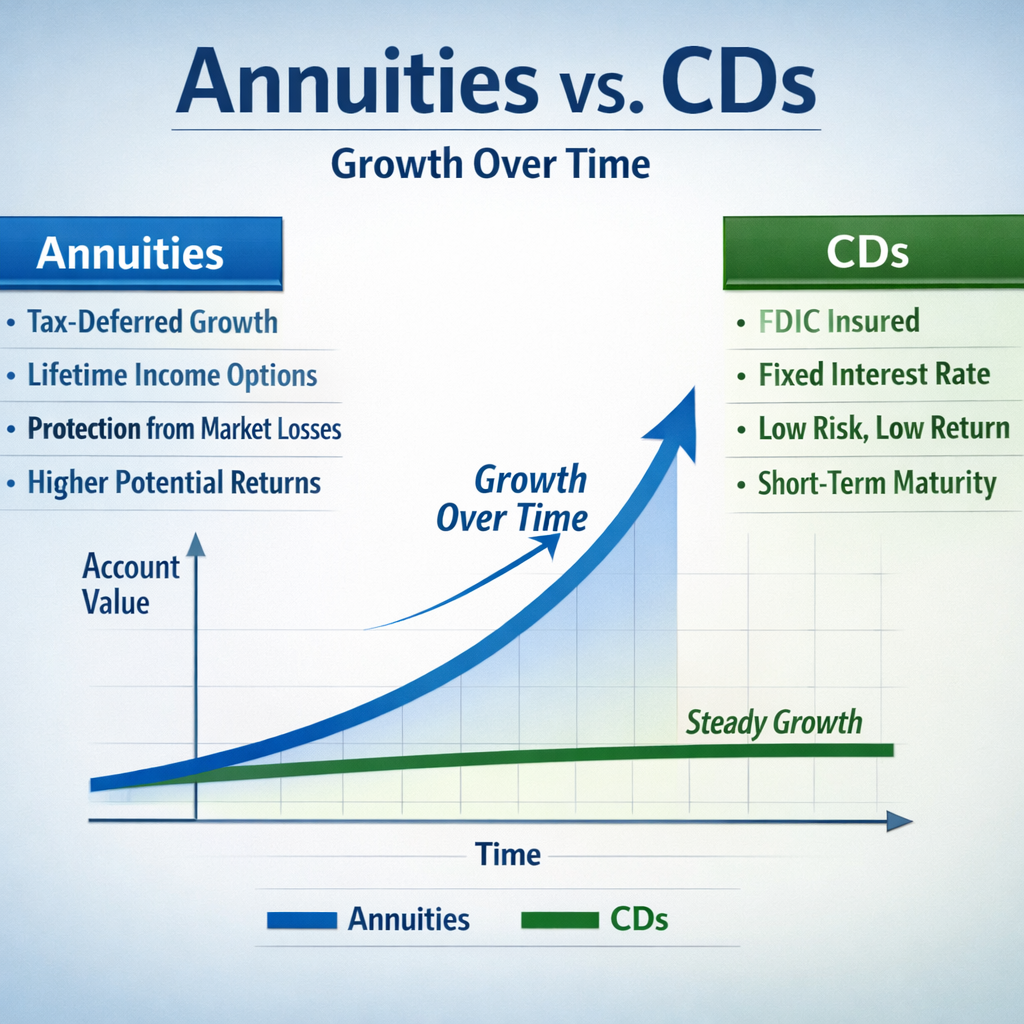
A MYGA (Multi-Year Guaranteed Annuity) is a type of fixed-rate annuity that allows you to lock in a guaranteed interest rate for a set number of years, typically 3 to 10 years. They are designed for conservative, tax-advantaged growth and are frequently described as the insurance industry’s version of a Certificate of Deposit (CD).
Advantages
- Lifetime Income: Protects against outliving savings.
- Tax-Deferred Growth: No taxes on earnings until withdrawal.
- Customization: Options for death benefits for beneficiaries.
- Safety: Fixed annuities protect against market losses.
When to Consider an Annuity
- You are close to or in retirement and need guaranteed income.
- You have maximized other tax-advantaged accounts like 401(k)s and IRAs.
- You want to secure income for essential expenses.
 Anthony The Flood Guy